
Uncategorized
Maker Tested: 5 Safety Tradeoffs in Nameplate vs Hanging Tag

Aug
A riveted nameplate or embroidered ID built into the collar itself wins for daily wear: it’s quieter, harder to lose, and holds up better on active or strong dogs. A hanging tag still earns its place when you rotate collars often or need to carry an official rabies or license tag. Either way, pair whatever you choose with a registered microchip. That’s the backup that matters most.
TL;DR:
- Durable engraved or riveted nameplates last longer and stay legible, especially on thick-coated or strong dogs, compared to cheap stamped tags that scratch easily.
- Fixed plates eliminate the loss risk common with dangling tags, but require replacement or collar change if updating contact information.
- Hanging tags are more practical for frequent collar rotation, legal compliance, and quick updates, but pose snag and noise risks for active dogs.
- Proper maintenance involves weekly inspections of rivets and rings, microchip registration, and temporarily removing collars during grooming or rough play.
- Custom leather collars provide greater durability, resistance to hardware failure, and personalized options suited for intense routines or powerful breeds.
Table of Contents
- Nameplate vs Hanging Tag: The Trade-Offs at a Glance
- How Do Collar Nameplates and Integrated ID Actually Work?
- Why Do Hanging Tags Remain So Common?
- Which ID Style Actually Fits Your Dog?
- Keeping Any ID System Safe Over Time
- Why Handcrafted Leather Collars Solve Both Problems at Once
- How Leatherforpets Matches Collars to Your ID Priorities
- A Maker’s Honest Take on Nameplates vs Hanging Tags
- Sources
Nameplate vs Hanging Tag: The Trade-Offs at a Glance
Every dog owner is really weighing five things: how long the ID lasts, how likely it is to fall off, whether it can snag on something, how much noise it makes, and how easy it is to update if you move or change your phone number. No single option wins every category, which is why the right pick depends on your dog’s routine more than any general rule.
- Durability: a riveted metal nameplate or laser-engraved buckle plate outlasts a cheap stamped tag, which tends to scratch illegible within a year or two, according to product comparisons from collar makers.
- Loss risk: integrated ID can’t fall off a split ring because there is no split ring. That matters most for dogs that swim, dig, or wrestle with other dogs.
- Snag risk: dangling tags catch on crate bars, brush, and furniture; a flat plate sits close to the collar and mostly avoids that problem.
- Noise: owners of light sleepers (human or canine) usually prefer the silence of a fixed plate over jingling metal.
- Update convenience: hanging tags win here. Swap a $10 tag and you’re done. Changing an engraved plate means a new plate or a new collar.
- Legal tags: many counties require a physical rabies or license tag that dangles by design. That’s a hanging-tag job, full stop.
- Choose both if you rotate between two or three collars regularly or if your dog needs a legal tag alongside a permanent nameplate. A hybrid setup, one fixed plate for daily ID and one small hanging tag for compliance, covers nearly every ownership scenario.
How Do Collar Nameplates and Integrated ID Actually Work?
A nameplate is usually one of three builds: a metal plate attached with rivets or small screws, text embroidered or stitched directly into the leather or webbing, or a laser-engraved plate mounted flush on the buckle itself. Each does the same job differently, but the goal is identical: your dog’s name, your phone number, and sometimes an address, permanently fixed to the collar rather than hanging off it.
The advantages show up the moment your dog starts moving. There’s no metal-on-metal jingle, no ring to snap, and nothing swinging near a crate door. Engraved or built-in ID reduces both noise and detachment risk compared with dangling tags, and for thick-coated breeds, a raised plate stays visible where a small stamped tag would disappear into fur.
The trade-off is flexibility. Change your phone number and you’re replacing the plate or the whole collar, not swapping a $5 tag. Loose rivets are also worth watching. A plate that’s starting to fail usually shows lateral wiggle before it actually falls off.
- Keep engraved text to name plus one phone number. Cramming in an address usually shrinks the font past a readable size at six feet.
- Sans-serif fonts hold up better on small plates than script styles.
- Check rivets monthly by pressing the plate and feeling for movement, not just looking at it.
Pro Tip: Run your thumb across the plate edges once a week. If you feel play before you see it, that’s your cue to retighten or replace, not wait for the plate to actually come loose.
Why Do Hanging Tags Remain So Common?
Hanging tags survive for one simple reason: they’re flexible. A stamped aluminum or stainless tag clips onto a split ring, and you can move it between collars in seconds, stack a rabies tag next to it, or replace the whole thing for a few dollars if it wears out.
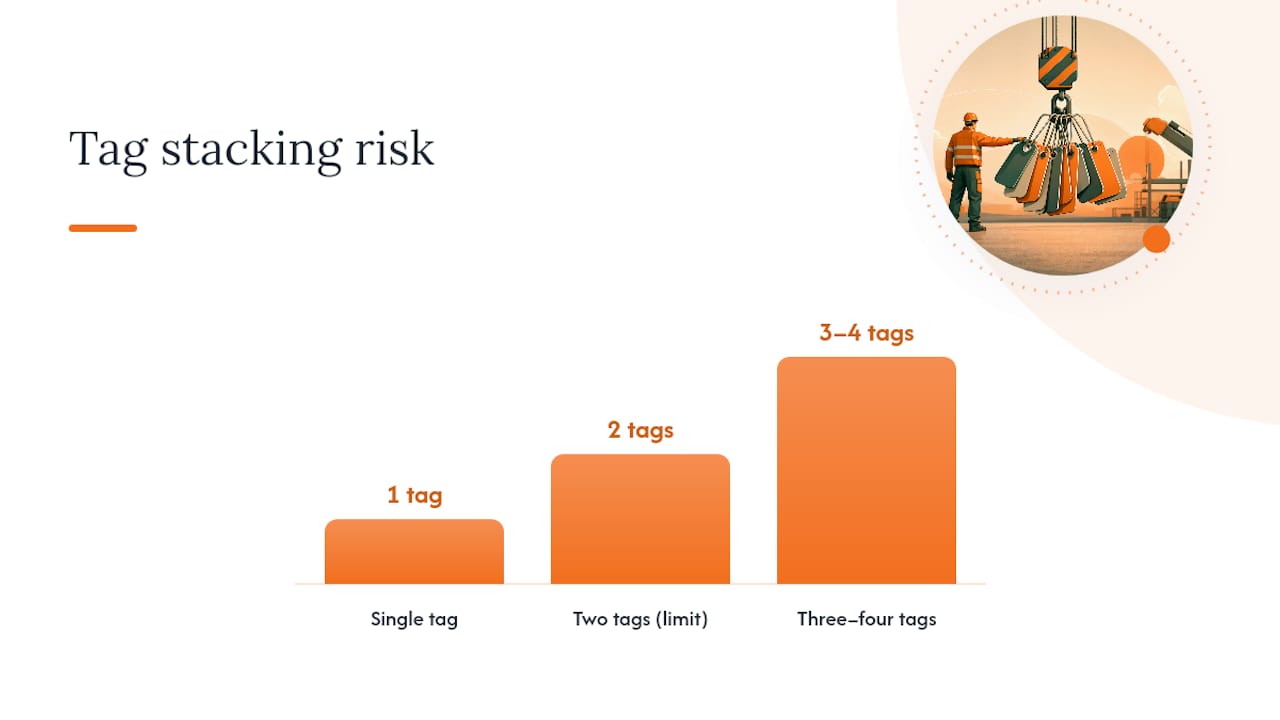
That flexibility comes with maintenance you can’t skip. Split rings are the weakest point in almost every tag setup, and a cheap thin ring will slowly pry open under normal chewing or fence-jumping. Stacking three or four tags on one ring multiplies that stress and adds jingle that some dogs find genuinely irritating.
- Use a solid, welded, or high-gauge split ring instead of the thin ones tags ship with.
- Avoid stacking more than two tags. If you need a rabies tag and an ID tag, that’s already the practical limit.
- Replace a ring showing any gap or bent seam immediately. It’s cheaper than a lost dog.
- Stamped engraving fades faster outdoors than laser engraving, so check readability every few months.
Tags also carry more snag risk than most owners expect. Dangling metal can catch on crate wire, brush, or a play partner’s collar, and collar charms and hanging hardware have been tied to real injury and choking risks when they hook onto something and the dog panics trying to pull free.
Which ID Style Actually Fits Your Dog?
Run through five questions before you buy anything, because the right answer changes fast depending on your dog’s routine.
- Does your dog spend time in a crate or kennel? If yes, lean toward a flat embroidered or engraved nameplate. Dangling tags are the higher snag risk in a crate setting.
- Do you rotate between multiple collars? Frequent swapping favors a hanging tag you can move in seconds, or a hybrid setup with a lightweight secondary tag.
- Do you legally need a rabies or license tag? That requirement means a hanging tag is non-negotiable alongside whatever permanent ID you choose.
- How thick is your dog’s coat? Thick-coated breeds read better with a raised plate than with embroidery buried in fur.
- How strong or active is your dog? Strong breeds that dig, swim, or play rough benefit most from a plate’s low detachment risk.
Once you’ve answered those, run this five-step check before you commit:
- Measure the neck properly and confirm the collar fits with the two-finger rule.
- Stand six feet back and test whether the engraving or embroidery is actually readable.
- Inspect rivets, screws, and rings for any looseness before first use.
- Register or update your dog’s microchip. This is the fallback if the physical ID ever fails.
- Keep one spare tag or backup ID on hand for travel or emergencies.
Keeping Any ID System Safe Over Time
Remove collars during crating, grooming, and rough off-leash play whenever practical. Even a low-profile nameplate adds a small snag point in those situations, and vet-adjacent safety guidance recommends removing collars rather than trusting hardware to hold under stress.
Build a simple maintenance rhythm: check split rings and plate rivets weekly for active dogs, monthly for calmer ones. Replace a ring at the first sign of a gap and replace a plate the moment it shows lateral play rather than waiting for full failure.
- Wipe engraved plates with a soft cloth to keep grooves readable; grit buildup is the main reason engraving looks “faded” long before it actually is.
- Test readability outdoors in daylight, not just under a store light.
- Register your dog’s microchip and keep the registry contact info current. It’s the layer that works when the collar doesn’t.
Pro Tip: If your dog is crated overnight, swap to a breakaway or no-collar setup and keep the ID collar on for walks only. It costs you nothing and removes the biggest snag risk entirely.
Why Handcrafted Leather Collars Solve Both Problems at Once
Leatherforpets builds every collar from vegetable-tanned leather, fitted to the dog in front of us rather than a generic size chart. That matters here because a nameplate is only as reliable as what it’s riveted to. Soft, mass-produced webbing stretches and loosens hardware over time; dense, properly tanned leather holds a rivet or engraved buckle plate the way it’s supposed to.
For breeds like the Presa Canario or American Bully, where neck strength and daily wear put real stress on hardware, that difference shows up fast. Tight stitching and solid rivets address the exact failure points covered above: loose plates, worn attachment points, and collars that don’t hold their shape after months of use.
How Leatherforpets Matches Collars to Your ID Priorities
If durability and quiet daily wear top your list, the Leather Dog Collar Honeycomb Colorful Color Changes give you a personalization-ready base built for everyday rotation.
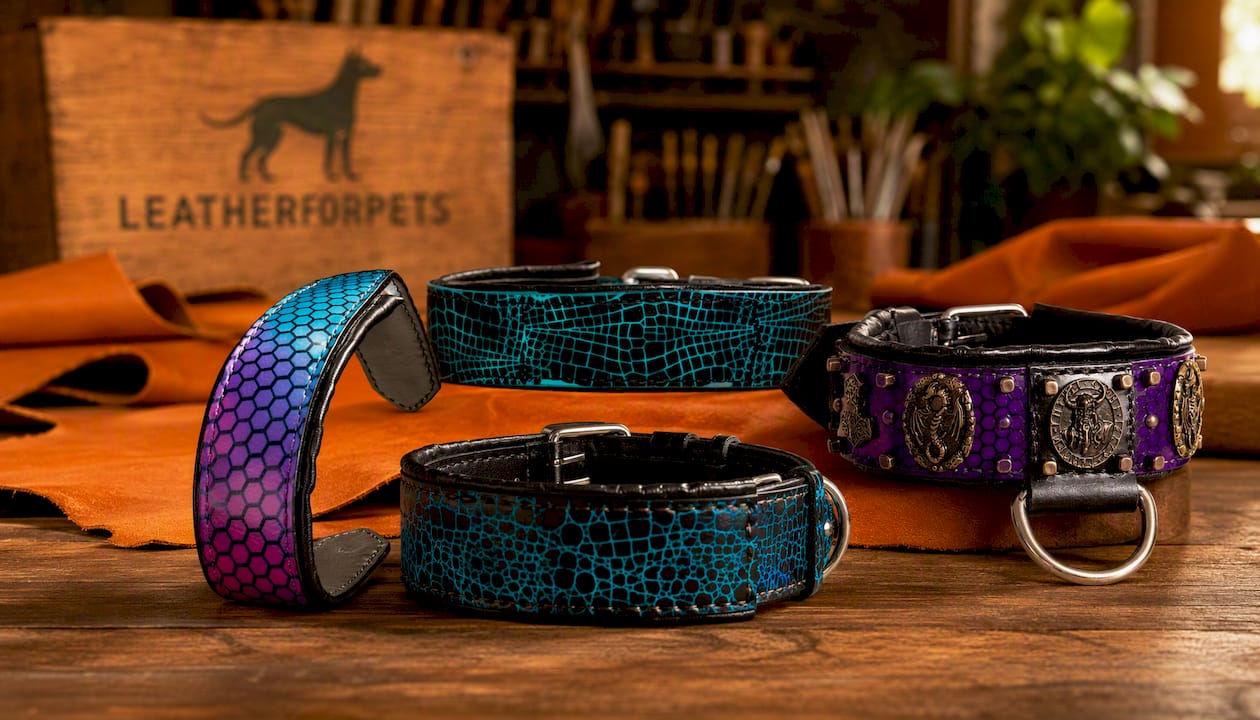
Want something distinctive for a dog that already turns heads? The Snake Skin Leather Dog Collar in turquoise and black pairs a bold look with the same solid hardware discussed throughout this guide, so style doesn’t cost you security.
For powerful breeds like the Cane Corso or American Bully, the Purple ODIN honeycomb collar is built with sizing and fittings sized for real neck strength, not just appearance.
Not sure whether a riveted plate or embroidered text fits your dog better? Run through the custom design process and pick based on the checklist above: plate for thick coats and strong dogs, embroidery for a quieter, lower-profile look. Measure your dog’s neck, choose your ID style, and place your order to get a collar built around your dog’s actual size and routine, not a generic template.
A Maker’s Honest Take on Nameplates vs Hanging Tags
The debate over nameplate vs hanging tag gets treated like a style choice online, and that undersells what’s actually at stake. A tag that jingles loose in a crate or catches on a fence isn’t a minor inconvenience. It’s a real, if uncommon, safety risk that a $12 upgrade in hardware quietly solves.
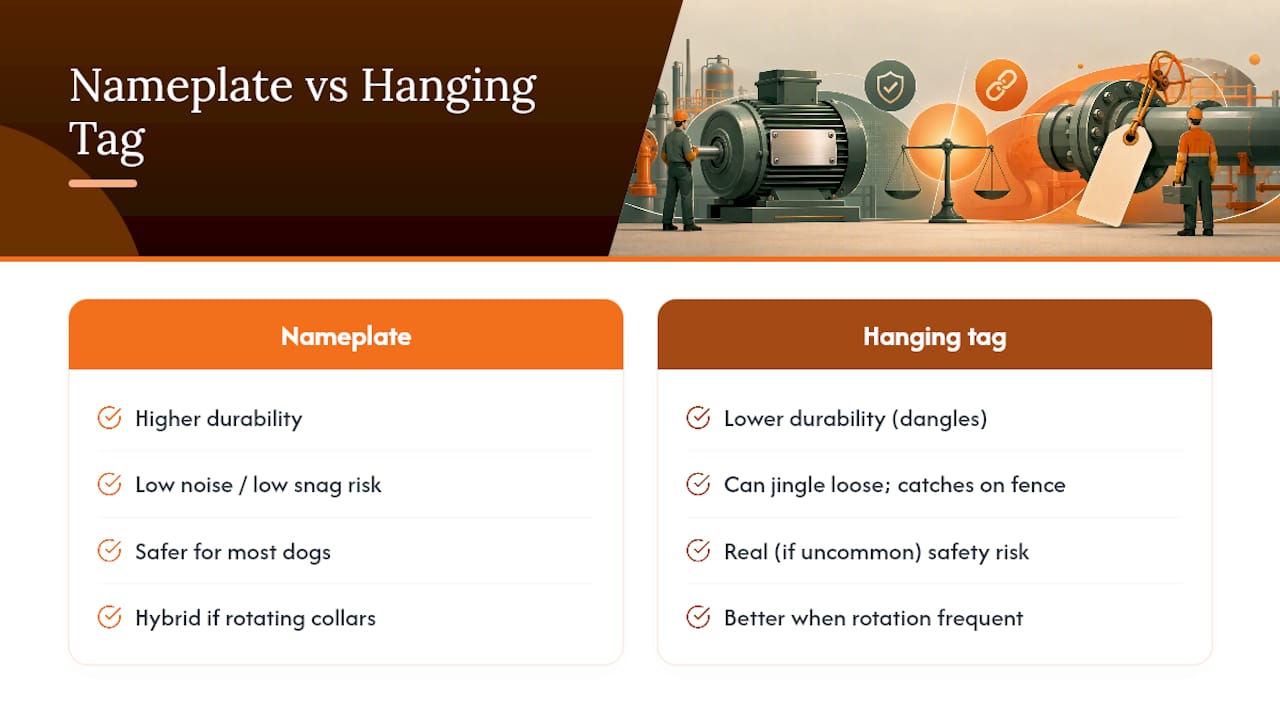
My honest bias, built from watching how collars actually fail in the field rather than how they look on a shelf: a well-built nameplate or embroidered ID beats a dangling tag for almost every dog that isn’t legally required to carry a separate license tag. It’s not close. The only scenario where I’d push back on that advice is frequent collar rotation, and even then, a hybrid setup solves it without giving up the safety of a fixed plate.
None of that replaces a microchip. Get one, register it, and keep the contact information current. If you’re unsure whether a plate or embroidery fits your dog’s coat and size, reach out to Leatherforpets directly. That’s a five-minute conversation that saves you from guessing.
— Dimitris
