
Uncategorized
Vegetable Tanned Leather for Dog Collars: Use 8–10 oz for Strength
Aug
Vegetable-tanned leather is hide cured with plant tannins instead of chromium salts, and it’s the right pick when you want a material that ages, molds, and repairs rather than one that just resists water and wear. Pick it for belts, wallets, saddlery, and dog collars where structure and a developing patina matter. Skip it if you need something soft, waterproof, and ready to use straight out of the box.
TL;DR:
- Vegetable-tanned leather makes up about 8% to 10% of global production and requires 30 to 60 days for full processing, making it more expensive and slower than chrome-tanned leather.
- It is ideal for projects requiring shape retention, tooling, and developing patina, such as belts, wallets, saddlery, and dog collars, but not suitable for waterproof or soft, ready-to-wear items.
- The process involves multiple steps, including fleshing, liming, tanning, dyeing, and drying, with each leaving visible marks and a distinct fiber structure in the finished product.
- Genuine veg-tan exhibits earthy smell, pale cut edges, noticeable water absorption, and the ability to hold impressions, which consumers can test without lab equipment.
- Veg-tan leather is less water-resistant, requires a break-in period, and has lower laboratory tensile strength compared to chrome-tanned leather, but it ages beautifully and holds shape over time.
Table of Contents
- What Is Vegetable-Tanned Leather, Chemically Speaking?
- Why Vegetable Tanning Never Disappeared
- How Is Vegetable-Tanned Leather Actually Made?
- What Makes Vegetable-Tanned Leather Worth the Trade-Off?
- Where Vegetable-Tanned Leather Falls Short
- Vegetable Tan vs. Chrome Tan: Which Fits Your Project?
- How Can You Tell If Leather Is Really Vegetable-Tanned?
- Caring for Vegetable-Tanned Leather the Right Way
- What Should You Actually Make with Vegetable-Tanned Leather?
- What Working with This Leather Actually Teaches You
- Find Your Dog’s Perfect Veg-Tan Collar
- Sources
What Is Vegetable-Tanned Leather, Chemically Speaking?
Tannins are plant compounds, mostly polyphenols, pulled from bark, wood, and fruit pods. Oak and chestnut bark supply most European tannins; mimosa bark and quebracho wood, both fast-growing and heavy in tannin content, dominate supply from South America and Africa. When a hide sits in a tannin bath, those molecules bind to collagen fibers in the skin and cross-link them, which is the actual chemistry behind “tanning.” That cross-linking compresses and stiffens the fiber structure permanently, so the hide stops rotting and gains the firm hand that makes vegetable tan distinct from anything cured with chromium.
The process runs 30 to 60 days from raw hide to finished leather, according to Galen Leather’s breakdown of the method, and it accounts for roughly 8% to 10% of global leather production. That’s a small slice of the market, and it’s small because slow tanning ties up capital and tannery space that chrome methods free up in a day or two.
A few things follow directly from this chemistry:
- Cut edges show a pale, even, fibrous core rather than a blue or gray-green tinge.
- Dye and oil penetrate deeper because the fiber structure stays more open than chrome-tanned hide.
- The leather holds a crease or tool mark because the collagen cross-links resist springing back.
- It darkens and firms with age instead of staying static, which is the basis of patina.
Why Vegetable Tanning Never Disappeared
Plant tanning is one of the oldest hide-preservation methods on record, practiced long before anyone understood collagen chemistry. Tanners just knew that soaking hides in bark and leaves stopped them from decaying. The method held the entire leather trade until the 1850s, when chrome tanning arrived and cut production time from months to hours. Most of the industry switched. Vegetable tanning survived in pockets, mainly among tanneries serving saddlers, bookbinders, and shoemakers who needed the tooling qualities chrome leather can’t match.
Tuscany became the reference point for quality veg-tan, and Swedish tanneries like Tärnsjö Garveri built parallel reputations doing the same slow work with local hides, positioning the craft as both an aesthetic and sustainability choice.
What that history means for buyers today:
- Fewer tanneries run veg-tan pits, so supply is tighter and prices sit higher than chrome leather of comparable grade.
- Specialist tanneries tend to control hide selection more tightly, which shows up as more consistent temper and color across a run.
- Artisan-scale production means lead times measured in weeks, not days, if a tannery is producing to order.
How Is Vegetable-Tanned Leather Actually Made?
Every step in this process leaves a mark you can see or feel in the finished hide, which is exactly why it’s worth knowing the sequence before you take a tannery’s word for it.
- Fleshing. Raw hides get mechanically scraped to remove leftover fat and muscle tissue. Skip this and the hide won’t tan evenly.
- Liming. Hides soak in a lime and water solution for several days to loosen hair and epidermis and swell the fiber structure so tannins can penetrate later.
- Deliming and bating. Enzymes and washes bring the pH back down and relax the fiber, removing the swelling from the lime step. A poorly delimed hide tans unevenly and can crack later.
- Tanning proper. The hide moves through a series of pits or drums with progressively stronger tannin concentrations, often starting under 5% and building past 30% over several weeks. Tanners judge completion by cutting a cross-section and checking that the tannin has fully penetrated to the core, not just the surface.
- Fatliquoring. Oils are worked into the fiber structure to keep it from drying brittle. This step controls how supple the final leather feels.
- Dyeing. Because veg-tan fiber is more open than chrome-tanned hide, dye penetrates deeper and produces richer, more even color, especially with aniline dyes.
- Drying and conditioning. Hides dry slowly, often hung, then get conditioned back to a target moisture level.
- Buffing and edge finishing. Surfaces get buffed for a smooth face, and edges are burnished, painted, or left raw depending on the intended use.
Pro Tip: Ask a tannery or seller how long their tanning cycle runs. A true veg-tan process rarely finishes in under three weeks. If someone claims “vegetable tanned” leather processed in a few days, ask what they mean, because that timeline usually points to a chrome-tan base with a vegetable retan finish rather than full veg-tan.
None of this is chemical-free. Tanneries still consume real volumes of water and generate wastewater loaded with organic solids and tannin runoff, and treating that waste responsibly takes energy and infrastructure. Vegetable tanning avoids chromium discharge, which is the bigger environmental liability with chrome tanning, but “natural” doesn’t mean the process has zero footprint.
What Makes Vegetable-Tanned Leather Worth the Trade-Off?
Patina is the headline benefit, and it’s a real physical process, not marketing language. Oils from your hands, UV exposure, and simple friction gradually darken and burnish the surface, deepening color unevenly in a way that reflects actual use. Tärnsjö Garveri and similar tanneries treat this aging as the defining trait of the material, not a flaw to engineer around.
The same fiber compression that creates patina also makes veg-tan the material saddlers and leatherworkers reach for when a piece needs to hold a shape:
- Tooling and stamping hold crisp detail because the compressed fiber resists springing back.
- Wet-molding lets you shape a holster or sheath that keeps its form once dry.
- Burnished edges seal cleanly because the dense fiber structure buffs down smooth rather than fraying.
- Structured goods like belts, wallets, and collars keep their shape through years of daily flexing.
Roughly 8% to 10% of global leather production runs through vegetable tanning, a figure that has held fairly steady even as chrome tanning dominates the mass market, according to Galen Leather.
On sustainability, the honest version is more nuanced than most product pages let on. Veg-tan avoids chromium salts entirely, which matters because chrome discharge is a genuine wastewater concern in tanneries that don’t manage it well. But vegetable tanning still uses significant water and time, and “more sustainable” here means avoiding one specific chemical risk, not a zero-impact process.
Where Vegetable-Tanned Leather Falls Short
Water is the biggest practical weakness. Veg-tan absorbs moisture readily, and wet leather darkens, can spot permanently, and loses some structural firmness while damp. It’s not waterproof, and no amount of conditioning makes it fully waterproof. If your project sits outdoors in the rain regularly, veg-tan needs deliberate protection or you accept it as part of the aging story.
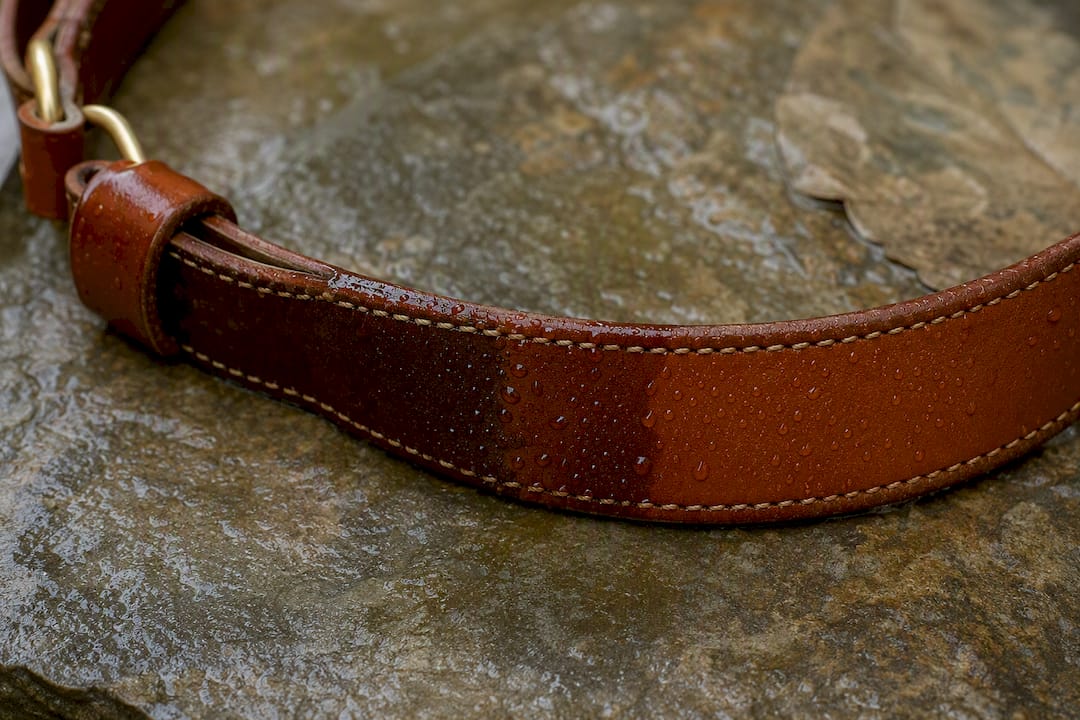
New veg-tan leather also starts stiff. That firmness softens over weeks or months of handling and flexing, which is fine for a wallet you carry daily but frustrating if you want something that drapes on day one.
Cost and lead time stack against veg-tan too. The 30 to 60 day tanning cycle ties up tannery capacity that chrome tanning turns over in a fraction of the time, and that cost shows up in the finished price.
On raw mechanical performance, laboratory comparisons of chrome and vegetable-tanned samples found chrome-tanned leather often measured higher breaking strength in controlled tensile testing. That doesn’t mean veg-tan is fragile. It means chrome tanning’s fiber chemistry produces a different kind of strength, one suited to stretch and flex rather than rigid hold.
Summed up, the drawbacks worth weighing before you buy:
- Not water-resistant without added treatment, and prone to spotting when wet
- Requires a break-in period before it feels supple
- Costs more and takes longer to produce than chrome-tanned equivalents
- Measures lower on raw tensile strength in lab comparisons, though this rarely matters for everyday goods
Vegetable Tan vs. Chrome Tan: Which Fits Your Project?
The choice comes down to what the leather has to do, not which tannage sounds more premium. Bench guidance from working leathercrafters boils it down to a simple rule: if a part needs to hold shape, take a tool mark, or wear a burnished edge, choose veg-tan. If it needs to drape, flex constantly, or shed water, chrome tanning usually wins.
Run your project against these axes before buying:
- Structure and hold: veg-tan compresses and holds a shape; chrome-tanned leather stays soft and springs back.
- Tooling and stamping: veg-tan takes detail cleanly; chrome-tanned hide resists most stamping techniques.
- Wet-molding: veg-tan shapes and locks when dried; chrome-tanned leather doesn’t hold a wet-molded form well.
- Water resistance: chrome tanning generally handles moisture better without spotting.
- Patina: veg-tan darkens and develops character with use; chrome-tanned leather changes appearance minimally over time.
- Production speed and cost: chrome tanning is faster and cheaper at scale; veg-tan costs more and takes longer.
Applied to actual goods: wallets and belts favor veg-tan almost every time because they need to hold crisp edges and develop patina with handling. Structured bags and saddlery lean veg-tan for the same reason. Jackets and anything worn against the body in variable weather usually favor chrome tanning or a chrome-retan blend for softness and water resistance. Collars for strong, active dogs land squarely in veg-tan territory because they need to hold shape under constant pulling and develop a better grip and look over years of wear.
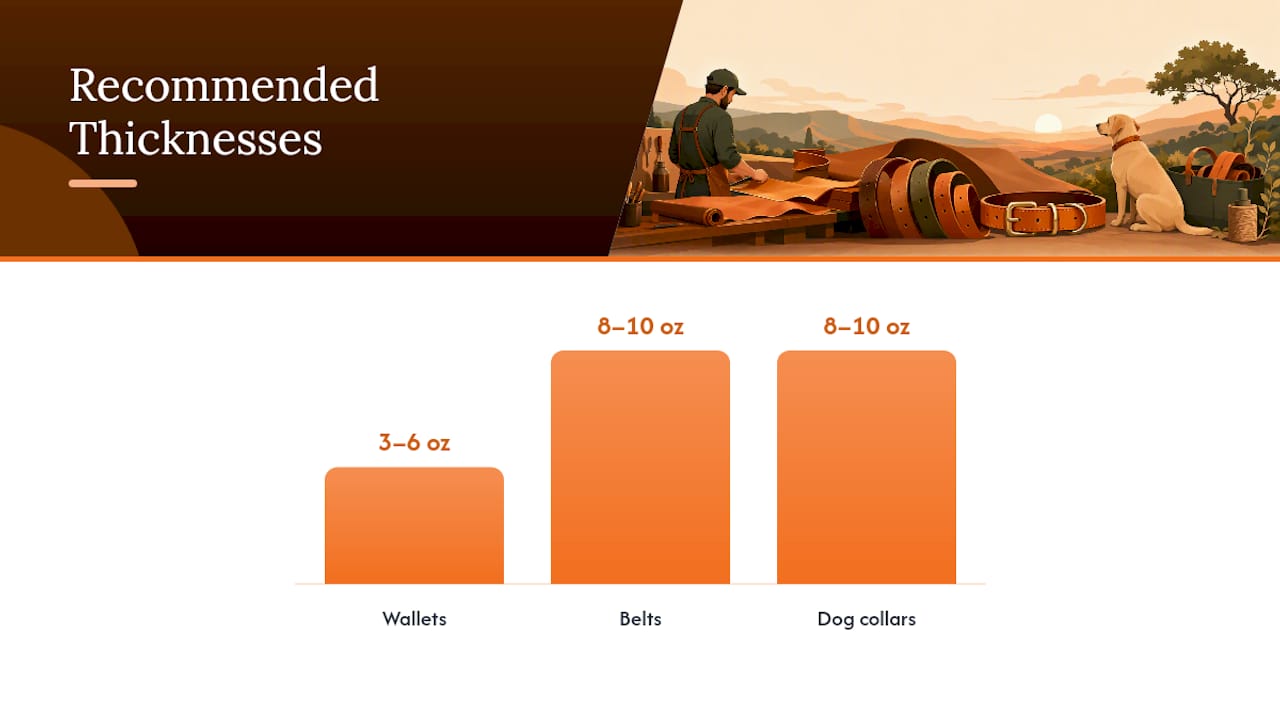
For thickness, maker guidance from LeatherCraftHaven puts wallets around 3 to 6 ounces and belts around 8 to 10 ounces, a useful starting point when you’re specifying weight for any structured good.
How Can You Tell If Leather Is Really Vegetable-Tanned?
You don’t need lab equipment to check a seller’s claim. A few low-tech tests catch most fakes and mislabels.
- Smell it. Genuine veg-tan carries an earthy, woody scent from the tannins themselves. Chrome-tanned leather smells more neutral or faintly chemical.
- Check the cut edge. A raw or unfinished edge should show a pale, uniform, fibrous cross-section straight through. A blue-gray or greenish core means chrome tanning underneath.
- Try the water-drop test. A drop of water on veg-tan darkens the spot noticeably within seconds, since the open fiber absorbs moisture fast. Chrome-tanned leather resists that darkening.
- Press it. Veg-tan takes a light thumbnail impression and holds it briefly before slowly relaxing, the same property that lets it take tooling.
Read the product description closely, too. Common identification cues line up with what tanneries themselves describe as the hallmark traits of the material. A finished, coated, or heavily edge-painted product can hide every one of these signs, so if a listing doesn’t specify tannage, ask the seller directly which tannins they used and how long the tanning cycle ran.
Caring for Vegetable-Tanned Leather the Right Way
Veg-tan rewards routine care and punishes neglect faster than chrome-tanned leather does, mainly because it absorbs whatever you put on it.
Stick to formulated leather balms or beeswax-based conditioners rather than neat vegetable oils. Straight olive oil is a common shortcut people try, but it goes rancid over time and can darken leather unevenly, which is exactly the opposite of the even patina you want. A light coat every few months, worked in with a soft cloth, keeps the fiber from drying out without oversaturating it.
If the leather gets wet, don’t force-dry it near a heater or in direct sun. Let it air dry slowly, away from direct heat, and reshape it gently while still slightly damp if it’s lost its form. Store pieces somewhere with airflow, since damp storage is how mildew gets started on organic material like this.
A few habits worth building into routine care:
- Wipe down after exposure to dirt, sweat, or road salt before conditioning.
- Condition lightly and often rather than heavily and rarely.
- Avoid silicone-based products, which can seal the surface and block future conditioning from absorbing.
- Take deep scratches or structural damage to a leather restorer instead of attempting a fix that could push oil or dye into the wrong layer.
Pro Tip: Condition on a light, regular schedule rather than waiting until leather looks dry. Once veg-tan feels stiff and chalky, it’s already lost moisture you can’t fully put back with a single heavy application.
Edge maintenance matters as much as the face of the leather. Burnished edges benefit from an occasional pass with a slicker and a drop of the same conditioner you use on the surface, which keeps them from fraying where they take the most handling.
What Should You Actually Make with Vegetable-Tanned Leather?
Veg-tan earns its keep on anything that needs to hold a shape and look better with age: belts, wallets, knife sheaths, structured bags, saddlery, and collars all fall into this category for the same underlying reason. The compressed fiber structure holds tooling, burnishes cleanly at the edge, and doesn’t sag under repeated stress the way softer chrome-tanned hide can.
For dog collars specifically, thickness and hardware choice matter as much as tannage. A collar built for a strong or active breed needs enough weight to resist stretching under a hard pull, comparable to belt-weight leather in the 8 to 10 ounce range, plus solid brass or steel hardware and a properly burnished edge so it doesn’t fray against fur or skin. Some makers blend a chrome-tanned lining with a veg-tan face for collars that need extra softness against the neck while keeping the structure and patina on the visible surface.
- Belts, wallets, and sheaths: veg-tan for edge quality and shape retention
- Saddlery and structured bags: veg-tan for load-bearing hold
- Collars for large or strong breeds: veg-tan at belt-comparable weight, with quality hardware
- Linings or high-flex components: chrome or combo construction where softness matters more than hold
What Working with This Leather Actually Teaches You
Making veg-tan collars for months at a stretch teaches you things no spec sheet mentions. The biggest one: thickness tolerance matters more than most buyers assume. A quarter-ounce difference in hide weight changes how a collar sits on a Presa Canario’s neck versus how it moves on a smaller, more active breed, and getting that wrong is the most common reason a “durable” collar still fails early.
Leatherforpets builds every collar around premium vegetable-tanned hides and traditional hand-finishing rather than mass production, which is the same approach behind the durability testing documented across the collar line. Practical lessons that shape how those collars get built include sizing to the dog’s actual neck measurement rather than breed averages, burnishing every edge before it ever meets fur, and building in a conditioning cadence from day one instead of waiting for the leather to dry out first.
That kind of attention is why customers who own strong, high-energy breeds consistently point to fit and edge comfort as much as looks when they talk about what they like.
— Dimitris
Find Your Dog’s Perfect Veg-Tan Collar
Everything covered above about patina, structure, and long-term hold is exactly why Leatherforpets builds every collar from premium vegetable-tanned leather instead of mass-market chrome-tanned stock. You get a collar that molds to your dog’s neck, develops character with wear, and can be re-conditioned for years instead of replaced.
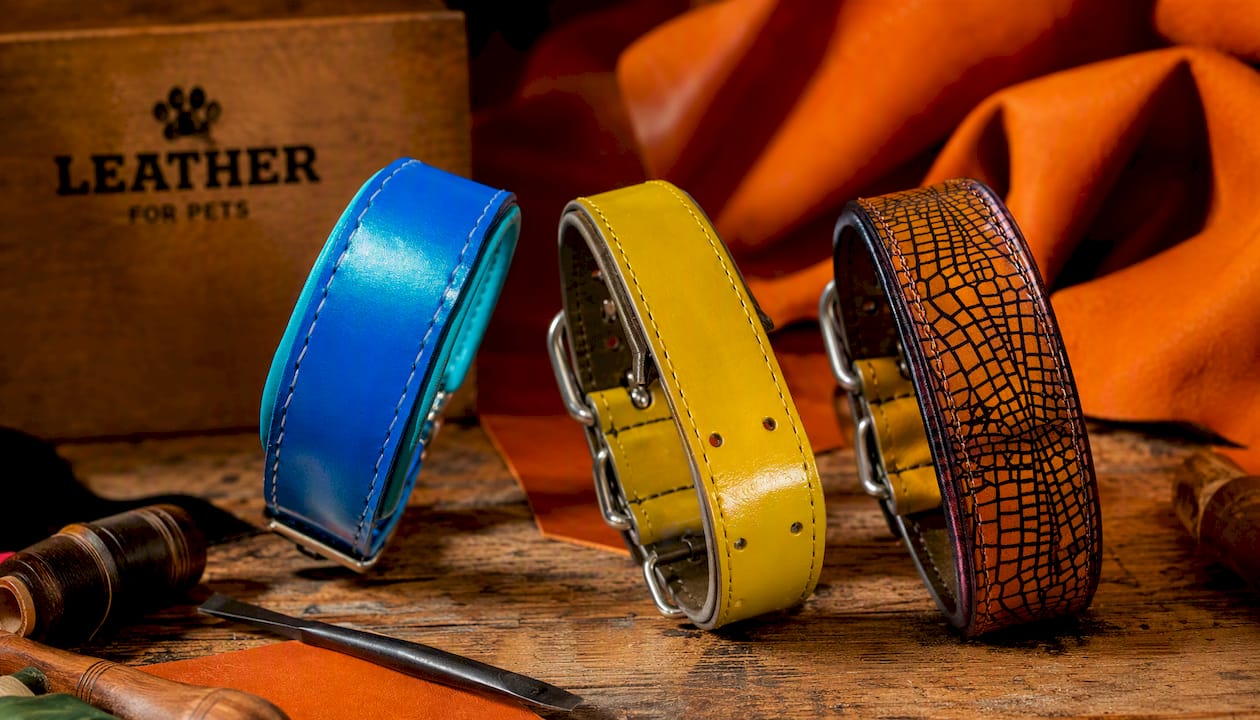
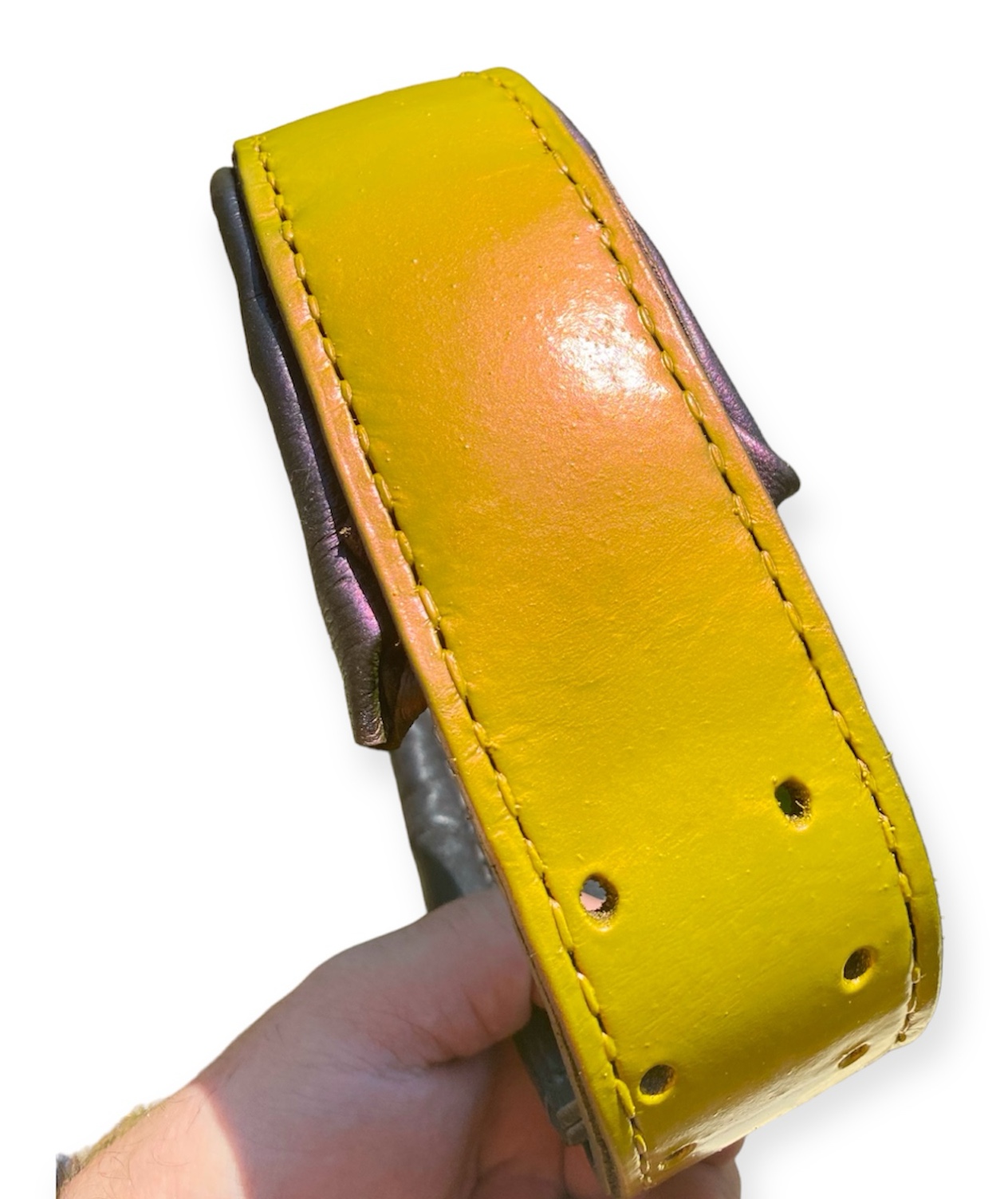
Three finishes show the range of what hand-finishing on veg-tan can do. The Chameleon Effect collar in blue to green uses vegetable-tanned hide’s deep dye penetration to hold a color shift that would look flat on chrome-tanned leather. The yellow to violet Chameleon Effect version uses the same technique for owners who want a bolder statement. The yellow to copper reptile pattern collar shows how far airbrushed detail can go on properly tanned, open-fiber leather.
Measure your dog’s neck directly rather than guessing from breed charts, pick a weight suited to your dog’s strength, and keep up the light conditioning routine covered earlier once your collar arrives. Every collar can be personalized with nameplates or matching leads. Browse the full collar collection and order a size that fits your dog’s actual neck, not just their breed.
Sources
- Vegetable Tanned Leather – Tärnsjö Garveri
- What Is Vegetable Tanned Leather? Is It Superior in Quality? – Galen Leather
- Comparison of physical and mechanical properties of chrome and vegetable tanned leather
Recommended
- Olive Green Leather Dog Collar for Strong Mastiff Breeds – Durable & Stylish
- Red Tooled Leather Dog Collar with Medieval Conchos | Heavy-Duty Style for Strong Dogs
- How Durable are LeatherforPets Dog Collars?
- Handmade Yellow Leather Dog Collar with Roman & Medieval Conchos for Large Dogs
Made with BabyLoveGrowth’s AI tools
